
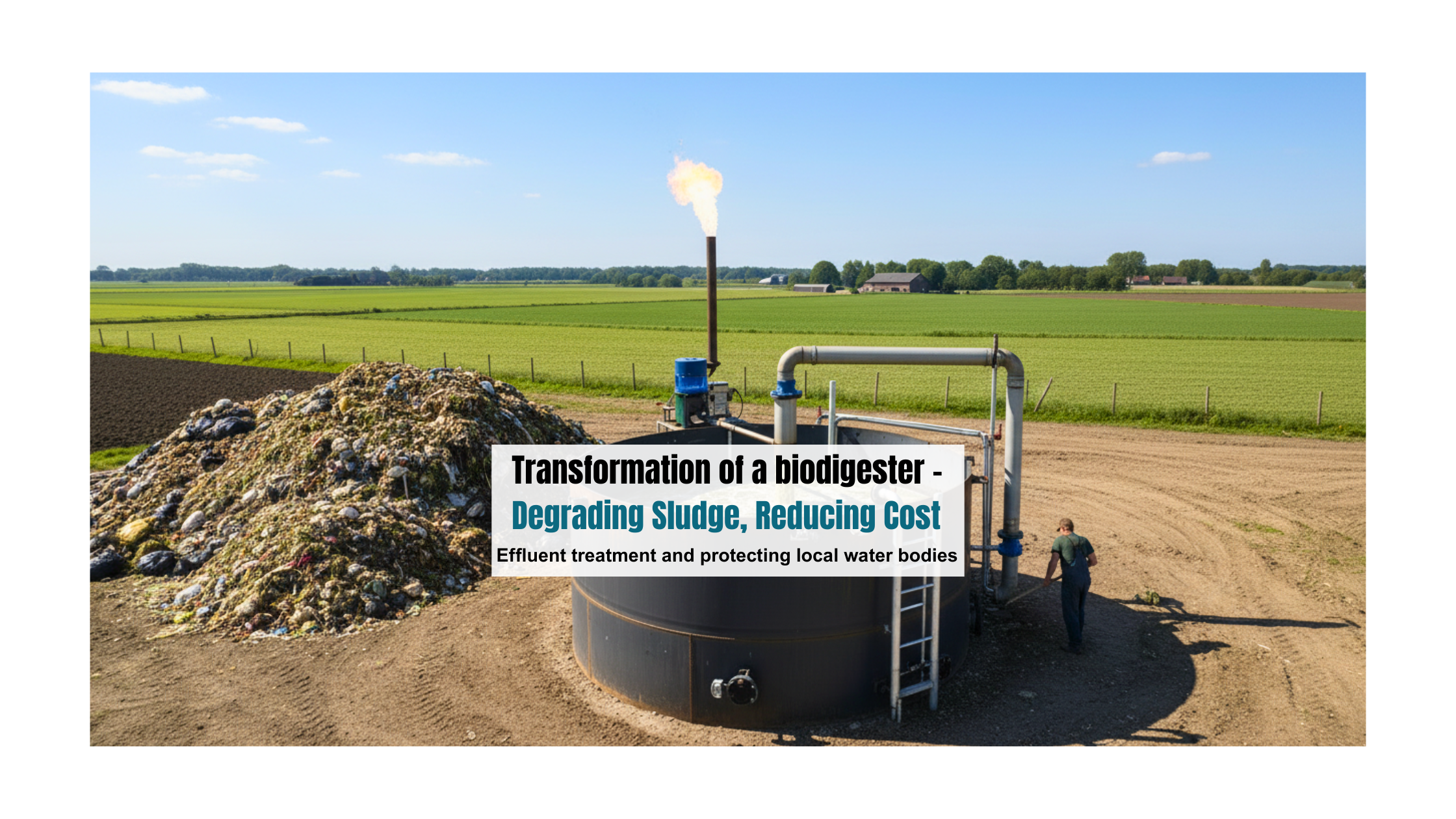

Transformation of a biodigester – Degrading Sludge, Reducing Cost
Background:
Pimpri Chinchwad Municipal Corporation (PCMC) is one of India’s fastest-growing urban hubs & is among the few municipal bodies in India that have taken a proactive, scientific approach to tackling wastewater challenges. From upgrading STPs to installing SCADA-based monitoring, and from implementing decentralised sewage management to piloting innovative bioremediation technologies, PCMC has demonstrated an unwavering commitment to enhancing effluent treatment efficiency and protecting local water bodies.
Aligning with their commitments and after our brief interaction with the officials at the TechWari 2025 event at Maharashtra Mantralay in Mumbai, we were summoned by the authorities. We were given the task of bioremediation of biodigesters at Chikhli STP-phase 2 to demonstrate our technology & get rid of hardened and accumulated sludge.
Chikhli STP Phase-2: Biodigesters (Primary & Secondary)
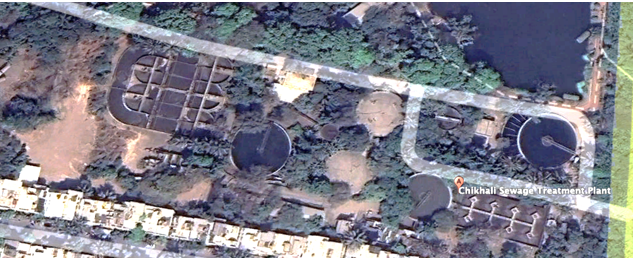
Chikhali phase-2 STP is a 16 MLD STP established in the year 2001 in the Chikhali area of the Pimpri-Chinchwad region
Understanding the issues:
| Dimensions | Primary Digester | Secondary Digester |
| Diameter | 72.1785 ft | 72.1785 ft |
| Height | 22 Ft | 22 ft |
| Volume | 2000 m3 | 2000 m3 |
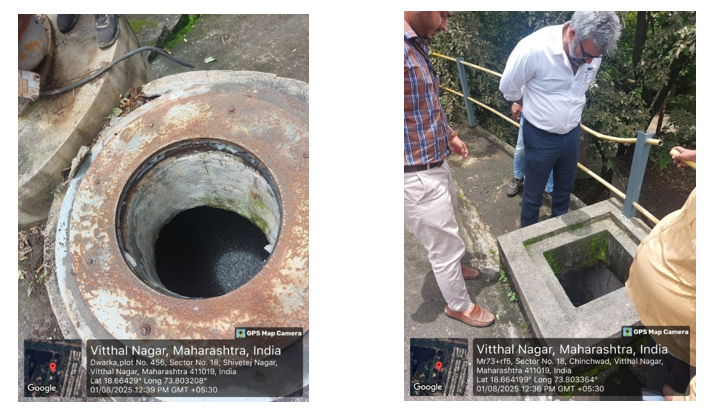
· There were 2 biodigesters located in Chikhali phase 2 STP, with a capacity of 2000 m3 each. The tanks constructed since 2001 serve as the sludge disposal units for Chikhali STP.
· With excessive sludge disposal and a lack of proper bioremediation, the sludge accumulated and had hardened over time.
· This has led to malfunctioning of biodigesters, and the sludge, which was supposed to be digested, had accumulated and hardened over time.
Negative Implications experienced:
- Excessive Sludge Accumulation and Volume Saturation
- Continuous storage without digestion had caused a massive buildup of dense, compacted sludge, significantly reducing the effective volume of the biodigester.
- The solid-to-liquid ratio was high, making pumping and desludging operations extremely difficult.
- Hardening and Stratification of Biomass
- Long-standing sludge had undergone stratification:
- Scum layer at the top.
- Thickened sludge at the bottom.
- Bottom layers were semi-solid or hardened, resisting normal flow or mixing and further digestion.
- Long-standing sludge had undergone stratification:
- Anaerobic Toxicity and Septicity
- Accumulated sludge had likely turned highly septic, with elevated levels of ammonia, H₂S, volatile fatty acids, and sulfides, leading to:
- Odour issues and corrosion potential within the tank.
- Accumulated sludge had likely turned highly septic, with elevated levels of ammonia, H₂S, volatile fatty acids, and sulfides, leading to:
- High OPEX:
- Heavy Use of chemicals to settle hardened sludge at the secondary outlet
- Manual Disposal of high volumes of Dewatered Sludge cakes through transport
- The stirrer of the primary tank was defunct due to hard sludge
Operational Cost Explained:
| Elements | Total units/day | Price/unit | Cost/year |
| Sludge Disposal | 4 trips | Rs. 3000 | Rs 43,20,000 |
| Poly dosing | 15 kgs | Rs 60/kg | Rs 3,24,000 |
| Miscellaneous* | Rs . 100000 |
*extra labour and equipment maintenance
Action Plan:
Team One Biotech proposed the application of a robust, facultative microbial consortia specifically developed for sludge liquefaction and volume reduction in stagnant or overloaded digesters. This solution focused not on methane generation but on biological hydrolysis, liquefaction, and solubilization of the accumulated biomass.
Mechanism of Action
- Enzymatic Hydrolysis
- The microbial strains secrete a wide range of enzymes such as proteases, lipases, cellulases, and amylases that break down complex organic solids into soluble forms.
- Facultative Anaerobic Activity
- The microbes work efficiently in low-oxygen or anaerobic environments, ideal for defunct digesters where aeration is not present.
- They also outcompete pathogenic and sulfate-reducing bacteria, suppressing odor and toxicity.
- Volume Reduction via Solubilization
- The digested solids are converted to liquid and semi-liquid forms, which:
- Reduces overall sludge volume.
- Improves pumping and handling efficiency.
- Allows easier drainage or further treatment.
- The digested solids are converted to liquid and semi-liquid forms, which:
- Odor and Toxicity Suppression
- The consortia help neutralize volatile organic acids, sulfides, and ammonia, improving safety and working conditions.
T1B Anaerobio:
Team One Biotech’s unique microbial preparation “T1B Anaerobio” consists of blends of several strains of anaerobic and facultative microorganisms, usually bacteria, along with key trace elements on a complex inert media. These organisms are isolated from nature and are not genetically altered in any way. They are selected based on accelerated reproduction rates and their ability to perform specific functions, such as good floc-forming capabilities, ability to degrade xenobiotic compounds, ability to survive in high TDS, degrade ammonia and other nutrients, ability to perform under variable pH & temperature, ability to secrete various enzymes, and degrade and liquefication of hardened -accumulated old sludge in biodigesters.
Benefits of using T1B Anaerobio
- Microbial consortia are effective under a wide pH and temperature range
- Reduces H2S production and improves Methane production
- Control solid production and loss of biomass
- Reduces the frequency of upsets due to poor biomass
- Effectively degrades BOD & COD
- Can biodegrade recalcitrant and xenobiotic compounds
- Improves efficiency of the anaerobic digestion process
- Economical & safe to use
T1B BioBlock
- All T1B bio blocks are made using TGRT.
- Can last up to 20 to 40 days, depending on size and flow rates, and site conditions
- Effortlessly cleans areas that are hard to reach
- Reduces organic solids and sludge buildup
- Improves settling and percolation
- Lowers BOD, TSS, COD & FO
- Liquifies hardened sludge
- Breaks down fat & grease buildup
- Significantly reduces malodors
- Works with or without oxygen due to the use of facultative microbial consortia
- Non-pathogenic and non-toxic, so it’s safe for humans, wildlife and livestock
- Unique blend
Execution:
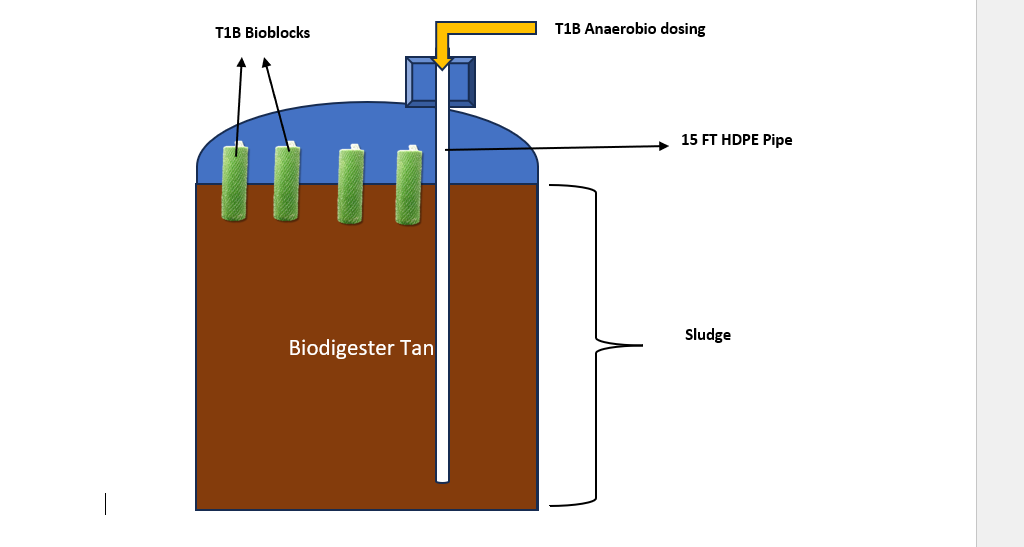
As depicted in the figure we adopted a 2-way dosing mechanism for 60 days to liquefy and reduce the sludge volume.
- T1B Anaerobio Dosing:
Infused-Injection technology was used to liquefy and degrade sludge at the bottom, where a pipe was inserted, and T1B Anaerobio mixed in water was injected at the bottom of the biodigesters. This injection of bio-culture deep at the bottom infused the selected microbes right at the bottom.
- T1B BioBlock Dosing:
Based on Time Guard Release Technology, the blocks were installed at the top of the sludge layer to liquefy and degrade the extremely hard layer of sludge from the top.
This 2-way dosing mechanism was adopted to compensate for the defunct stirrer and lack of mixing facility in the biodigester to invert and mix sludge regularly.
Results:
Sludge Degradation:
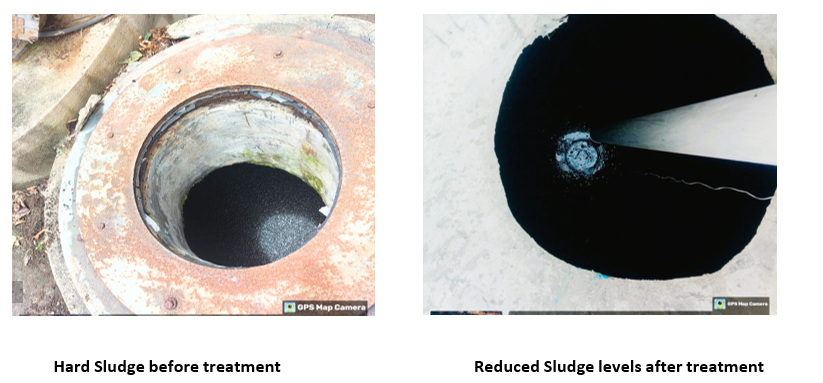
Sludge levels after treatment
| Day of Implementation | Level of Sludge Degraded (ft) | Level of Hard sludge from the bottom to top (ft) |
| 0 | 0 | 18 |
| 15 | 2 | 16 |
| 30 | 5.5 | 12.5 |
| 45 | 7.5 | 10.95 |
| 60 | 8.125 | 9.875 |
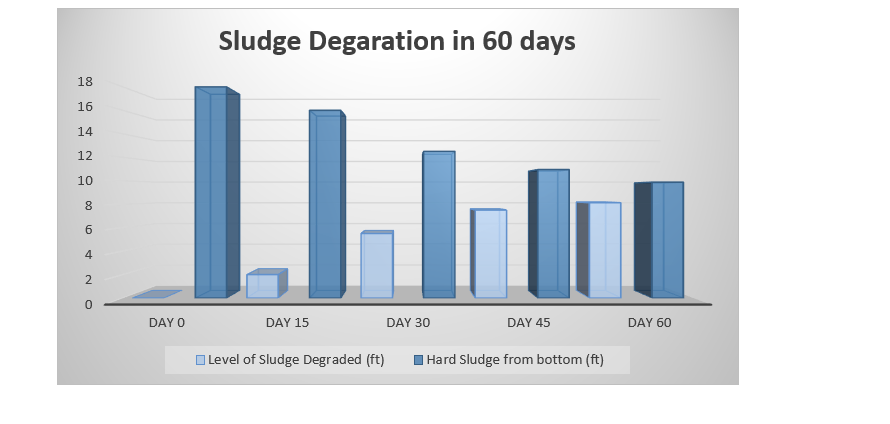
Approximately 50% of the sludge was degraded and liquefied in a span of 60 days
- Cost Reduction:
| Day of Implementation | Sludge disposal cost/day (Rs) | Cost of chemicals/day (Rs) |
| 0 | 12000 | 1600 |
| 15 | 11500 | 1500 |
| 30 | 10250 | 1400 |
| 45 | 10000 | 1150 |
| 60 | 9500 | 1000 |
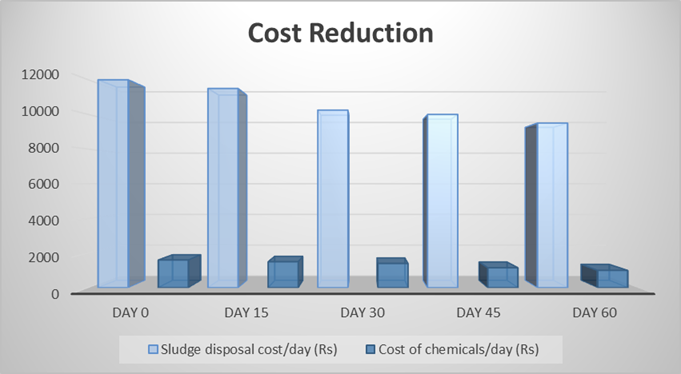
Approximately 30% of the OPEX cost was reduced in a span of 60 days
Conclusion:
- The sludge was effectively degraded by 50% in 2 months and can be liquefied completely in a span of 12 months.
- The OPEX cost can be reduced by 90% in a span of 12 months.
A substantial reduction in odour, ammonia levels, and sulfide generation, showing reactivation of microbial balance